The Australian government has raised the cost of applying for a student visa from AUD 710 to AUD 1600 as of today, July 1st, 2024—a startling 225% rise!
The Department of Home Affairs website of the Australian government has additional details regarding the increase in visa fees.
The organization asserts that “talented students” will still apply to Australia’s higher education provider in spite of this.
I worry that it will significantly affect students from other countries. This extreme step can result in a drop in enrollment, which would have a negative financial and cultural impact on providers.
As part of its efforts to control record migration, Australia announced on Wednesday that it will increase the savings required of foreign students in order to obtain a visa and warning multiple universities to fraudulent student recruitment methods.
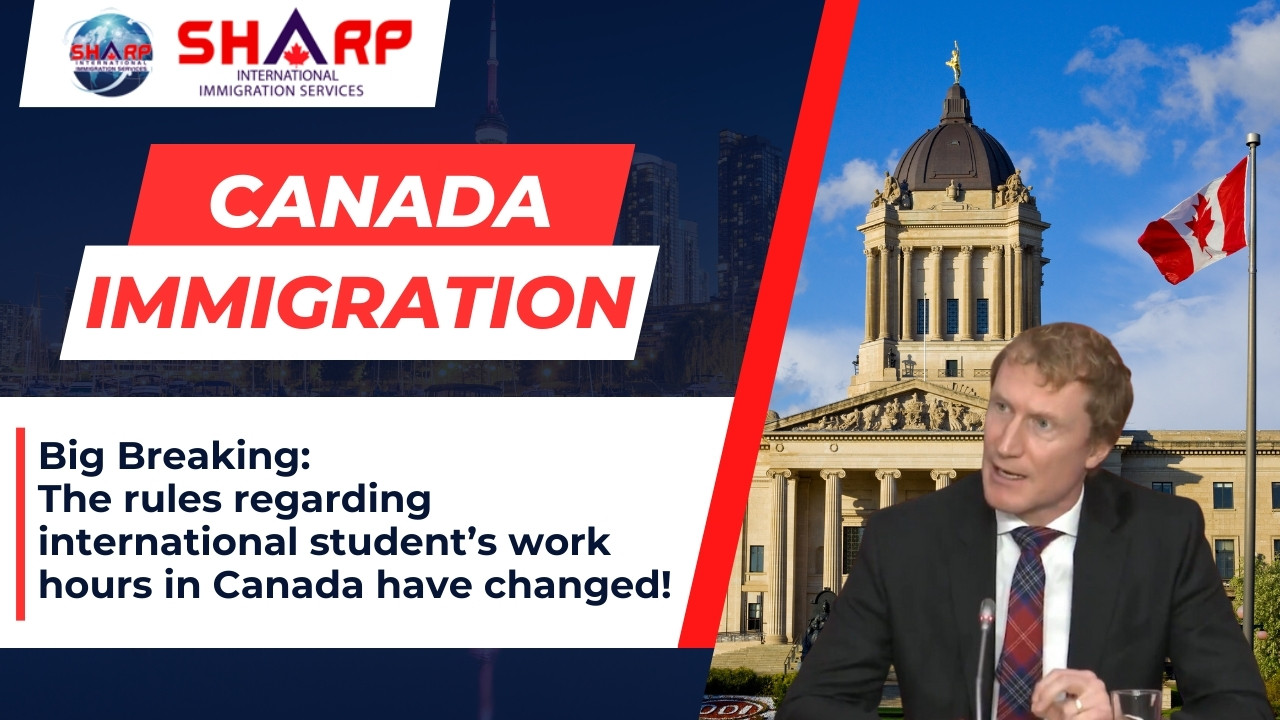
In an official announcement, Canada’s immigration minister, Marc Miller, stated that the country hopes to grant 235,600 new study permits by the year 2024.
Additionally, the cap of 392,667, which is based on a 60% approval rate, is set for new study permit applications (apart from those pursuing master’s or doctoral degrees and those in primary and secondary education).
A comprehensive province-by-province provincial attestation letter and study permit approval allotment for 2024 were also provided by the minister (mentioned in the later portion of this article).
By 2024, Canada hopes to have granted 485,000 study permits in total. This comprises about 97,000 Canadian study permit extensions.
The immigration service estimates that 606,000 applications for study permits (including extensions and other variations) will be received overall in 2024.
Study Permit Allocations by Province, 2024
The study permit allocations and anticipated approvals for applications are listed below; students pursuing master’s or doctoral degrees as well as those in elementary and secondary education are not included.
Allocation After Initial Adjustment
Final Allocation After Top-Ups for PTs with Approval Rate Below 60%
Province / Territory
PT Allocations (A)
Projected SPs Approved (B)
% Change from 2023
Top-Up (C)
Revised PT Allocations with Top-Up (A+C)
Projected SPs Approved (same as B)
Alberta
40,894
24,537
10%
N/A
40,894
24,537
British Columbia
83,000
49,800
-18%
N/A
83,000
49,800
Manitoba
15,233
9,140
-10%
3,420
18,652
9,140
New Brunswick
9,279
5,567
-10%
5,372
14,651
5,567
Newfoundland and Labrador
2,365
1,419
10%
788
3,153
1,419
Northwest Territories
333
200
4900%
N/A
333
200
Nova Scotia
12,906
7,744
-10%
7,472
20,378
7,744
Nunavut
333
200
6567%
N/A
333
200
Ontario
235,000
141,000
-41%
N/A
235,000
141,000
Prince Edward Island
2,004
1,202
-10%
308
2,312
1,202
Quebec
72,716
43,629
10%
45,202
117,917
43,629
Saskatchewan
12,043
7,226
10%
3,011
15,054
7,226
Yukon
417
250
205%
N/A
417
250
Total
486,523
291,914
-28%
65,572
552,095
291,914
In this scenario, the number of students in 2024 would be higher in some provinces and territories than in 2023, while it would be lower in others.
How long does it take the IRCC to process research permits? According to the most current IRCC processing update, the average processing time for study permit applications is 11 weeks for those from outside Canada, 10 weeks for those from within, and 77 days for study permit extensions.
In response to increased migration, Australia has tightened its visa requirements for foreign students. The new tougher rules are a part of the attempts to control the inflow of foreign students.
These are the Three key adjustments you need to be aware of.
1. Language proficiency:
There is now a higher language fluency criterion in English for graduate and student visas. The IELTS score requirement for candidates seeking a temporary graduate visa has increased from 6.0 to 6.5. Applicants for student visas must receive a minimum score of 6.0.
2. Requirements for financial proof: Additionally, candidates seeking student visas now have to meet higher financial standards. In order to study in the nation, students must now prove they have savings of at least $24,505, a requirement that has increased from prior levels by 17%.
3. Crackdown on institutes:
In accordance with the new regulations, if education providers consistently violate the law, they may be prohibited by the Australian government from accepting new international students.